
Level Up Your Life: How to Create a Personal Development Plan That Works for You
The journey of life is a continuous evolution, a dynamic landscape where stagnation is the only true barrier to progress. To truly thrive, to unlock our full potential, we must intentionally cultivate growth. This isn’t about chasing fleeting trends or conforming to external expectations; it’s about a deeply personal commitment to becoming the best version of ourselves. A well-structured personal development plan serves as our North Star, guiding us through the complexities of self-improvement and empowering us to not just live, but to level up our lives in meaningful ways.
Contents
- 0.1 Understanding the Importance of Personal Development
- 0.2 Assessing Your Current Situation and Setting Goals
- 0.3 Identifying Areas for Growth and Improvement
- 0.4 Creating a Personal Development Plan
- 0.5 Implementing Strategies for Growth and Progress
- 0.6 Overcoming Challenges and Staying Motivated
- 0.7 Celebrating Success and Continuing Your Personal Development Journey
- 1 FAQs
- 1.1 1. What is personal development and why is it important?
- 1.2 2. How can I assess my current situation and set personal development goals?
- 1.3 3. What are some strategies for identifying areas for growth and improvement?
- 1.4 4. How do I create a personal development plan?
- 1.5 5. What are some tips for staying motivated and overcoming challenges in personal development?
Understanding the Importance of Personal Development
Personal development is more than just a buzzword; it’s the conscious and proactive pursuit of refining our skills, expanding our knowledge, enhancing our well-being, and improving our overall quality of life. It’s the engine that drives us forward, preventing us from becoming complacent and ensuring we always have something new to learn, achieve, or overcome.
Unlocking Untapped Potential
Every individual possesses a unique blend of strengths, talents, and dormant abilities. Personal development acts as the key to unlocking this treasure trove. By actively engaging in learning, practicing new skills, and stepping outside our comfort zones, we discover capabilities we never knew we had, pushing the boundaries of what we thought was possible. This internal exploration and subsequent external expression lead to a profound sense of accomplishment and self-belief.
Enhancing Overall Well-being
Beyond career aspirations, personal development profoundly impacts our mental, emotional, and even physical health. Learning new coping mechanisms, practicing mindfulness, developing stronger interpersonal skills, or even pursuing a new hobby that brings joy, all contribute to a richer, more fulfilling life. It’s about building resilience, fostering inner peace, and cultivating a proactive approach to our own happiness. A person actively engaged in their own growth often experiences lower stress levels, greater self-esteem, and a more positive outlook on life, creating a virtuous cycle of improvement.
Life is replete with unforeseen obstacles and inevitable setbacks. While we cannot control external circumstances, we can control how we respond to them. Personal development equips us with the tools and mindsets necessary to navigate these challenges with greater resilience. It teaches us adaptability, problem-solving skills, and the invaluable lesson that failures are not endpoints, but rather opportunities for learning and redirection. This internal fortitude allows us to bounce back stronger, more knowledgeable, and ultimately, more capable of facing future adversities.
Assessing Your Current Situation and Setting Goals
Before embarking on any journey, it’s crucial to know your starting point. Self-assessment is the bedrock of effective personal development, allowing us to identify where we are now and where we aspire to be.
Conducting a Holistic Self-Assessment
Take an honest, comprehensive look at various facets of your life. Consider your career, relationships, health, finances, spiritual well-being, hobbies, and personal aspirations. Ask yourself critical questions: What are my strengths? What areas do I find challenging? What truly energizes me? What drains my energy? Journaling, mindfulness exercises, or even discussing these points with a trusted mentor can provide invaluable insights. Be objective, but also be compassionate with yourself. This isn’t about self-criticism, but about self-awareness.
Defining Meaningful and Achievable Goals
Once you have a clear picture of your current state, you can begin to articulate your desired future. Your personal development goals should be specific, measurable, achievable, relevant, and time-bound (SMART). Instead of a vague goal like “get healthier,” aim for “run a 5k in three months.” Break down larger aspirations into smaller, manageable milestones. This makes the journey less daunting and allows for regular tracking of progress, providing a sense of accomplishment along the way. Your goals should resonate with your deepest values and provide a genuine sense of purpose.
Identifying Areas for Growth and Improvement
With a clear understanding of your current situation and well-defined goals, the next step is to pinpoint the specific domains where growth is most needed. This isn’t about fixing perceived flaws, but rather about consciously cultivating strengths and addressing areas that hinder your progress.
Pinpointing Skill Gaps
Consider your career aspirations or personal projects. Are there specific skills you lack that are preventing you from reaching the next level? Perhaps it’s public speaking, a new software program, leadership abilities, or even time management. Identifying these gaps allows you to focus your learning efforts and acquire the necessary competencies. This might involve formal education, online courses, workshops, or seeking mentorship from experts in those fields.
Addressing Limiting Beliefs and Habits
Often, our greatest obstacles are not external, but internal. Limiting beliefs – ingrained thought patterns that tell us we aren’t capable or worthy – can significantly sabotage our growth. Similarly, unhelpful habits can hinder progress. Through introspection, identify these internal blocks. Once recognized, they can be challenged and gradually replaced with empowering beliefs and constructive habits. This often requires consistent effort, self-compassion, and sometimes, seeking support from therapists or coaches.
Creating a Personal Development Plan
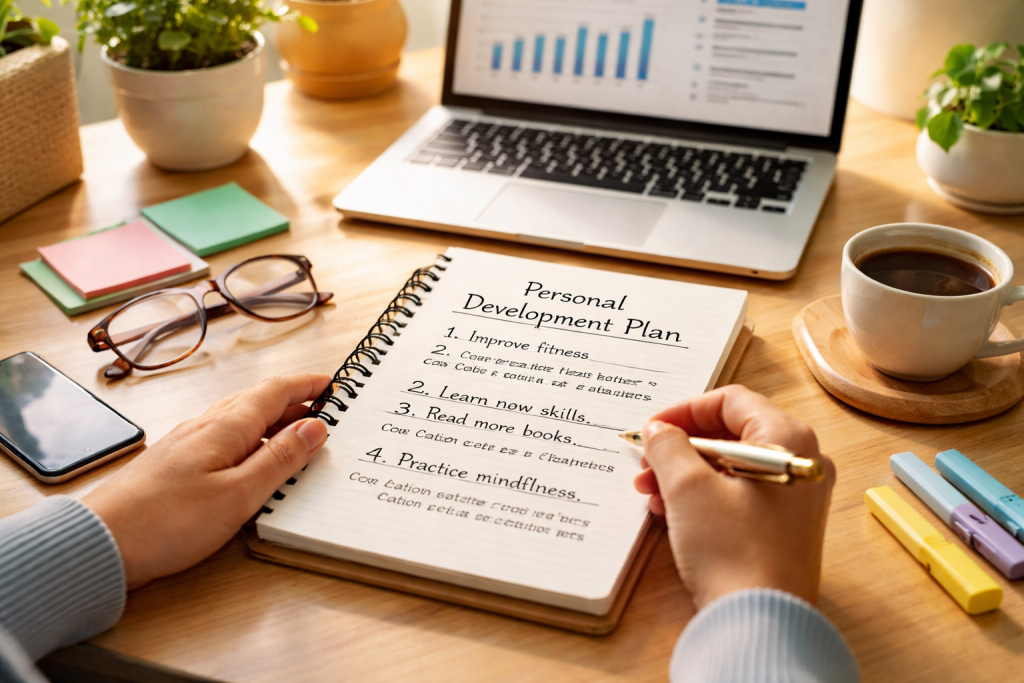
The self-assessment and goal-setting phases are foundational; now comes the blueprint. A well-crafted personal development plan is your actionable roadmap, outlining the specific steps you will take to achieve your goals.
Developing a Detailed Action Plan
For each of your identified goals, create a series of concrete action steps. What specific activities will you undertake? When will you do them? What resources will you need? For example, if your goal is to “improve public speaking,” your action plan might include “enroll in a Toastmasters club,” “practice delivering a presentation for 15 minutes daily,” and “record and review practice sessions weekly.” Break down larger actions into smaller, more manageable tasks to maintain momentum and prevent feeling overwhelmed.
Incorporating Learning and Skill Acquisition Strategies
Your plan should actively integrate opportunities for learning and skill development. This could involve reading books, taking online courses, attending workshops, listening to podcasts, seeking mentorship, or even experimenting with new approaches. Diversify your learning methods to keep engagement high and access information from various perspectives. Remember that learning is an ongoing process, not a one-time event.
Establishing Timelines and Milestones
Assign realistic timelines to each action step and goal. This creates a sense of urgency and accountability. Additionally, identify key milestones along the way. Achieving these smaller victories not only reinforces your progress but also provides motivation to continue. Regularly review your timelines and adjust them as needed, acknowledging that life can be unpredictable. The plan is a living document, meant to be adapted.
Implementing Strategies for Growth and Progress
Having a plan is only half the battle; consistent implementation is where true transformation occurs. This requires discipline, perseverance, and a proactive approach.
Cultivating Consistent Habits
Growth is rarely instantaneous; it’s a cumulative effect of small, consistent actions. Focus on building habits that support your personal development goals. If you aim to learn a new language, dedicate 30 minutes each day to studying. If you want to improve your fitness, schedule regular workouts and stick to them. Habit formation takes time and effort, but once ingrained, these routines become powerful drivers of progress.
Seeking Feedback and Mentorship
Don’t be afraid to solicit feedback from trusted friends, colleagues, or mentors. An outside perspective can offer invaluable insights into areas for improvement that you might not perceive. Mentorship, in particular, can accelerate your growth by providing guidance, sharing experiences, and offering support through challenges. Learning from those who have traversed similar paths can save you time and prevent common pitfalls.
Embracing Learning from Mistakes and Setbacks
Mistakes are an inevitable part of any growth journey. Instead of viewing them as failures, see them as invaluable learning opportunities. Analyze what went wrong, identify what you could do differently next time, and adjust your approach. Setbacks are not roadblocks; they are detours that often lead to a deeper understanding and ultimately, more resilient progress. Maintain a growth mindset, recognizing that every experience, positive or negative, contributes to your evolution.
Overcoming Challenges and Staying Motivated
The path of personal development is not always smooth. There will be moments of doubt, plateaus, and temptations to revert to old patterns. Sustaining motivation through these challenges is crucial.
Developing Resilience and Self-Compassion
When faced with setbacks, practice self-compassion. Treat yourself with the same kindness and understanding you would offer a good friend. Acknowledge the difficulty, but don’t dwell on self-criticism. Instead, focus on learning and moving forward. Cultivate resilience by reminding yourself of your purpose, your strengths, and the progress you’ve already made. Reminders of your past successes can be powerful motivators.
Finding Accountability and Support Systems
Share your goals with a trusted friend, family member, or join a community of like-minded individuals. Having an accountability partner can provide an extra layer of motivation and help you stay on track. Regularly check in with each other, celebrate successes, and offer encouragement during challenging times. Knowing someone else is invested in your journey can make a significant difference in maintaining commitment.
Rekindling Your “Why”
When motivation wanes, revisit your original reasons for embarking on this personal development journey. What initially inspired you? What impact do you envision this growth having on your life? Reconnecting with your “why” can reignite your passion and remind you of the profound benefits awaiting you at the end of every challenging phase. Visualizing your desired future and the positive changes it will bring can be a powerful tool for maintaining momentum.
Celebrating Success and Continuing Your Personal Development Journey
Acknowledging and celebrating your achievements, no matter how small, is vital for sustained motivation and a positive self-image.
Recognizing and Rewarding Progress
Take the time to genuinely appreciate the progress you’ve made. Whether it’s mastering a new skill, overcoming a limiting belief, or achieving a key milestone, acknowledge your efforts. Small, thoughtful rewards – a favorite meal, an outing, or simply some dedicated relaxation time – can reinforce positive behaviors and make the journey more enjoyable. These celebrations are not just about the external reward, but about internalizing your capability and success.
Reflecting on Achievements and Lessons Learned
Regularly pause to reflect on your journey. What have you learned? How have you grown? What challenges did you overcome, and what strategies proved most effective? This reflective practice provides valuable insights for your future development and helps solidify the changes you’ve made. It allows you to see the tangible impact of your efforts and gives you a fresh perspective on your trajectory.
Embracing a Lifelong Learning Mindset
Personal development is not a destination; it’s a continuous journey. As you achieve one set of goals, new aspirations will emerge. Cultivate a lifelong learning mindset, viewing the world as an endless source of knowledge and opportunities for growth. Remain curious, adaptable, and open to new experiences. The true level-up is not a single point in time, but the ongoing commitment to becoming a more capable, fulfilled, and impactful individual, forever evolving, forever ascending.
FAQs
1. What is personal development and why is it important?
Personal development refers to the process of improving oneself through activities that enhance awareness, develop talents and potential, build human capital, and facilitate employability. It is important because it allows individuals to become more self-aware, set goals, and work towards achieving their full potential.
2. How can I assess my current situation and set personal development goals?
You can assess your current situation by reflecting on your strengths, weaknesses, opportunities, and threats. Setting personal development goals involves identifying areas for improvement, determining specific and measurable objectives, and creating a plan to achieve them.
3. What are some strategies for identifying areas for growth and improvement?
Strategies for identifying areas for growth and improvement include seeking feedback from others, conducting self-assessments, exploring new opportunities, and learning from past experiences.
4. How do I create a personal development plan?
To create a personal development plan, you should outline your goals, identify the steps needed to achieve them, set a timeline for completion, and establish metrics for measuring progress.
5. What are some tips for staying motivated and overcoming challenges in personal development?
Some tips for staying motivated and overcoming challenges in personal development include staying focused on your goals, seeking support from others, maintaining a positive mindset, and adapting to changes as needed.