
Navigating the Education Landscape: Online Learning vs Traditional Classroom
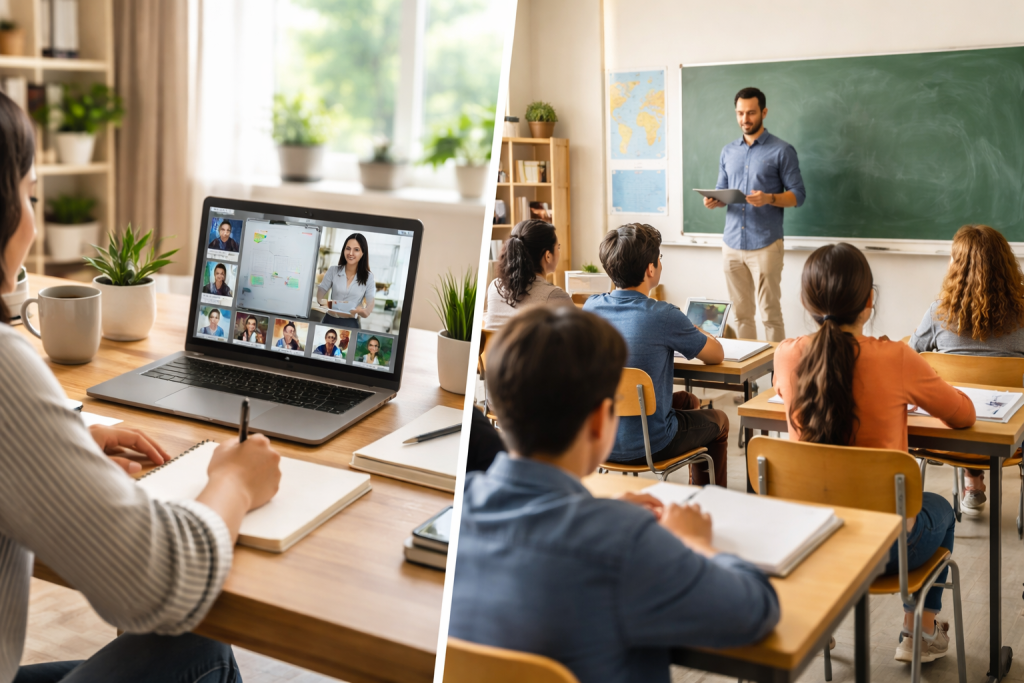
The dawn of the 21st century has ushered in an era of unprecedented change, nowhere more evident than in the realm of education. For generations, the traditional classroom, with its rows of desks, blackboards, and in-person instruction, stood as the undisputed cornerstone of learning. However, the relentless march of technological innovation, particularly the widespread accessibility of the internet, has ignited a transformative shift, giving rise to a potent new contender: online learning. This evolution has prompted a critical examination of how we acquire knowledge, forcing educators, students, and institutions alike to navigate a complex and ever-evolving educational landscape.
The explosion of online learning has fundamentally altered the paradigm of education, offering a flexible and often accessible alternative to the rigid structures of the past. Its benefits are numerous and compelling, resonating with a diverse range of learners.
Contents
- 1 Unlocking Accessibility and Flexibility
- 2 Cost-Effectiveness and Diverse Learning Resources
- 3 Addressing the Digital Divide: A Persistent Challenge
- 4 The Power of Face-to-Face Interaction and Immediate Feedback
- 5 Cultivating Social Skills and a Sense of Community
- 6 Structured Environment and Accountability
- 7 Learning Outcomes and Retention Rates
- 8 Skill Development: Beyond Rote Memorization
- 9 Pedagogical Adjustments and Instructor Training
- 10 Student Support and Digital Literacy
- 11 Blended Learning and Flipped Classrooms
- 12 Personalized Learning and Data Analytics
- 13 Maintaining Engagement and Preventing Burnout
- 14 Ensuring Quality and Accreditation
- 15 Self-Assessment of Learning Style and Discipline
- 16 Program Requirements and Career Goals
Unlocking Accessibility and Flexibility
One of the most significant advantages of online learning lies in its unparalleled accessibility. Geographic boundaries, once insurmountable barriers to education, virtually disappear. Students residing in remote areas, individuals with mobility challenges, or those with demanding work schedules can now pursue educational goals that were previously out of reach. The flexibility of online platforms allows learners to engage with course material at their own pace and on their own schedule, adapting education to fit their lives rather than the other way around. This self-directed approach fosters a sense of autonomy and responsibility, empowering students to take ownership of their learning journey.
Cost-Effectiveness and Diverse Learning Resources
For many, financial considerations play a crucial role in educational choices. Online learning often presents a more cost-effective alternative to traditional education, reducing expenses associated with commuting, housing, and sometimes even tuition fees. Furthermore, the digital nature of online learning opens up a vast repository of diverse learning resources. Beyond traditional textbooks, students gain access to interactive simulations, multimedia presentations, online collaboration tools, and a wealth of real-world data, enriching their understanding and catering to various learning styles.
Addressing the Digital Divide: A Persistent Challenge
Despite its transformative potential, online learning is not without its challenges. The most prominent among these is the persistent digital divide. Unequal access to reliable internet connectivity and appropriate technology hardware can disenfranchise a significant portion of the population, exacerbating existing societal inequalities. Moreover, the lack of face-to-face interaction can sometimes lead to feelings of isolation and a diminished sense of community among students. Sustaining motivation and engagement in a self-paced, online environment requires a high degree of self-discipline and effective time management skills, which not all students possess naturally.
While the allure of online learning is undeniable, the traditional classroom continues to hold a vital place in the modern education landscape, offering unique advantages that are difficult to replicate in a virtual environment. Its enduring appeal stems from a long-established history of fostering critical social and personal development alongside academic achievement.
The Power of Face-to-Face Interaction and Immediate Feedback
The immediacy of face-to-face interaction in a traditional classroom fosters a dynamic and interactive learning environment. Students can engage in spontaneous discussions, ask questions in real-time, and benefit from the nuances of non-verbal communication from both instructors and peers. This direct interaction facilitates immediate feedback, allowing for prompt clarification of concepts and personalized guidance, which can be crucial for understanding complex subjects. The shared physical space inherently encourages collaborative learning, enabling students to work together on projects, share ideas, and build interpersonal skills essential for future success.
Cultivating Social Skills and a Sense of Community
Beyond academic learning, the traditional classroom plays an invaluable role in the development of crucial social and emotional skills. It provides a structured environment for students to learn how to navigate social dynamics, resolve conflicts, and collaborate effectively with diverse individuals. The shared experience of being in a physical classroom fosters a sense of community, belonging, and shared purpose. This camaraderie can translate into strong support networks, both academically and personally, which are often harder to cultivate in purely online settings.
Structured Environment and Accountability
For many students, the structured routine and inherent accountability of the traditional classroom are significant advantages. Fixed class times, regular assignments, and in-person assessments provide a framework that helps keep students on track and motivated. The physical presence of an instructor can serve as a powerful motivator, encouraging active participation and discouraging procrastination. This structured environment can be particularly beneficial for younger learners or those who thrive in a more supervised and regulated setting.
The question of which mode of education is more effective is complex and multifaceted, with myriad factors influencing outcomes. Research on this topic often yields mixed results, suggesting that effectiveness is highly dependent on the individual learner, the subject matter, and the quality of the instructional design.
Learning Outcomes and Retention Rates
Studies comparing learning outcomes in online and traditional settings have often found no significant difference in academic achievement for many subjects, particularly when the online course is well-designed and engaging. However, some research suggests that for certain subjects requiring extensive hands-on experience or highly interactive discussions, the traditional classroom may offer an advantage. Retention rates can also vary, with challenges in maintaining student engagement sometimes leading to higher dropout rates in online programs, particularly those lacking robust support systems.
Skill Development: Beyond Rote Memorization
The development of critical 21st-century skills, such as critical thinking, problem-solving, collaboration, and digital literacy, is paramount in today’s world. Both online and traditional environments can cultivate these skills, but through different mechanisms. Online learning inherently fosters digital literacy and self-directed learning, while traditional classrooms often provide more opportunities for spontaneous in-person collaboration and presentation skills. The effectiveness in developing these skills hinges on the pedagogical approaches employed, rather than solely on the delivery medium.
The recent global shift to remote learning highlighted both the potential and the pitfalls of rapidly transitioning from traditional to online education. This experience underscored the importance of careful planning, robust infrastructure, and adequate training for both educators and students.
Pedagogical Adjustments and Instructor Training
Successfully transitioning to online learning requires a significant pedagogical shift. Teaching online is not simply about translating traditional lectures to a digital format. It necessitates a redesign of course content, the adoption of new teaching methodologies, and the effective utilization of digital tools. Educators require comprehensive training in online teaching strategies, effective moderation of online discussions, and the use of learning management systems to create engaging and productive virtual learning environments.
Student Support and Digital Literacy
For students, adapting to online learning demands a new set of skills, including excellent time management, self-motivation, and proficient digital literacy. Educational institutions must provide robust support systems, including technical assistance, academic advising tailored to online learners, and resources for promoting student well-being. Bridging the digital divide and ensuring equitable access to technology and internet connectivity remains a critical challenge that necessitates proactive solutions from policymakers and educational leaders.
Technology’s influence extends far beyond merely facilitating online courses; it is fundamentally reshaping the traditional classroom itself, creating “blended” or “hybrid” learning environments that integrate the best of both worlds.
Blended Learning and Flipped Classrooms
Blended learning models combine elements of online and in-person instruction, allowing students to engage with some course material independently online while dedicating classroom time to interactive activities, in-depth discussions, and collaborative projects. The “flipped classroom” model, a popular form of blended learning, involves students reviewing lectures and content online before class, freeing up classroom time for problem-solving, peer teaching, and personalized mentorship from the instructor. These approaches leverage technology to personalize learning and maximize the effectiveness of face-to-face interaction.
Personalized Learning and Data Analytics
Technology allows for unprecedented levels of personalization in education. Adaptive learning platforms can tailor content and pace to individual student needs, identifying areas where a student struggles and providing targeted resources. Learning analytics, the collection and analysis of student data, provides educators with insights into learning patterns, engagement levels, and areas requiring intervention, enabling them to provide more effective and timely support. This data-driven approach empowers educators to move beyond a one-size-fits-all model, fostering a truly individualized learning experience.
Both online and traditional educational models face inherent challenges that require ongoing attention and innovative solutions to ensure optimal learning experiences.
Maintaining Engagement and Preventing Burnout
In online learning, maintaining student engagement over extended periods can be difficult. Creative instructional design, interactive activities, regular communication, and opportunities for peer collaboration are crucial. For both online and traditional settings, addressing student burnout and promoting mental well-being is increasingly important. Educators must be attuned to signs of stress and provide resources for support.
Ensuring Quality and Accreditation
The proliferation of online courses raises concerns about quality control and accreditation. It is imperative that online programs adhere to rigorous academic standards and that institutions offering them are properly accredited to ensure the value and recognition of degrees and certifications. Similarly, traditional institutions must continually innovate to remain relevant and ensure that their curricula and teaching methods are preparing students for the demands of a rapidly changing world.
Ultimately, the choice between online learning and traditional classroom education is a deeply personal one, influenced by individual learning styles, life circumstances, academic goals, and financial considerations. There is no universally superior option; rather, the “best” choice is the one that aligns most effectively with a student’s unique needs and aspirations.
Self-Assessment of Learning Style and Discipline
Prospective students should conduct a thorough self-assessment of their learning style. Do they thrive in a highly structured environment with regular in-person interaction, or do they prefer the flexibility and self-pacing of online learning? Their level of self-discipline, time management skills, and comfort with technology are crucial factors. Students who are highly self-motivated and adept at organizing their own learning often find success in online environments, while those who benefit from external accountability and immediate social interaction may prefer traditional classrooms.
Program Requirements and Career Goals
The nature of the chosen academic program and future career goals should also heavily influence the decision. Some fields, particularly those requiring extensive laboratory work, clinical rotations, or hands-on training, may be better suited to a traditional or blended learning approach. Conversely, subjects that are primarily theoretical or digitally based can often be learned effectively online. Researching the specific requirements and learning outcomes of different programs is essential to making an informed decision that will effectively prepare one for their chosen career path. The educational landscape is no longer a monolithic entity but a dynamic ecosystem offering diverse pathways to knowledge. By understanding the nuances of both online and traditional learning, individuals can intelligently navigate this landscape and forge their own successful educational journeys.